

Three steps.
One answer.
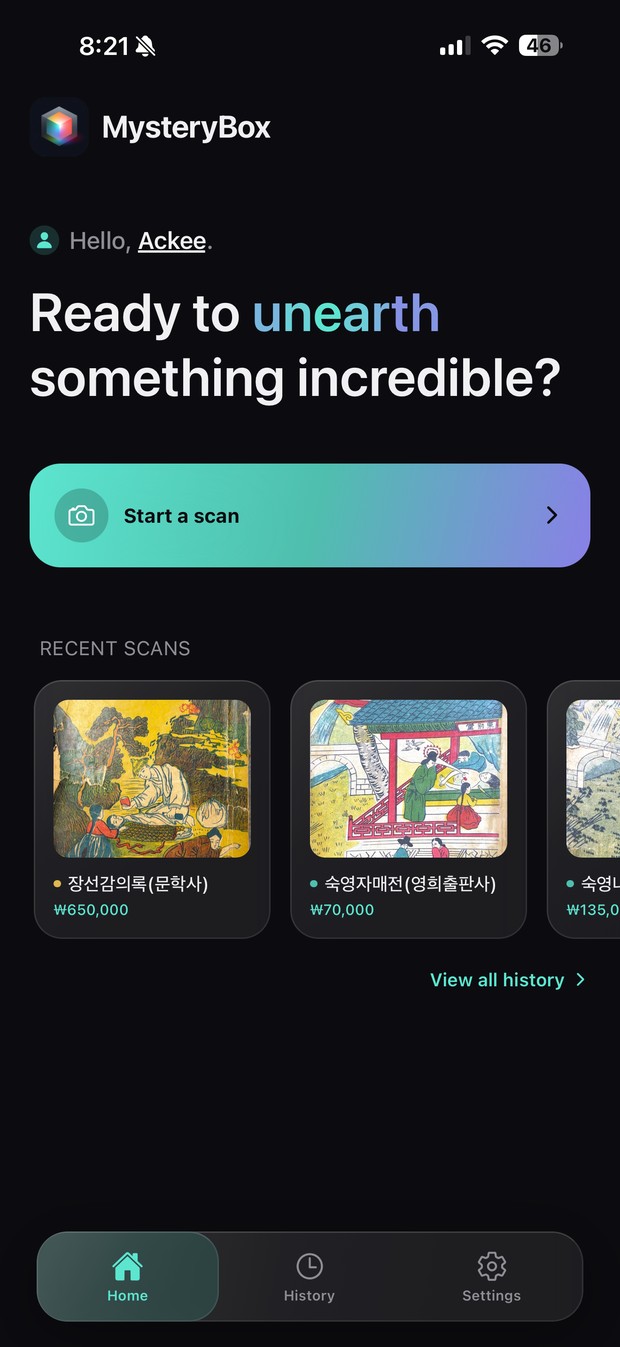
Open the app and start a new scan. Everything you have looked at before stays on the home screen, so picking up an old appraisal is as quick as starting a new one.
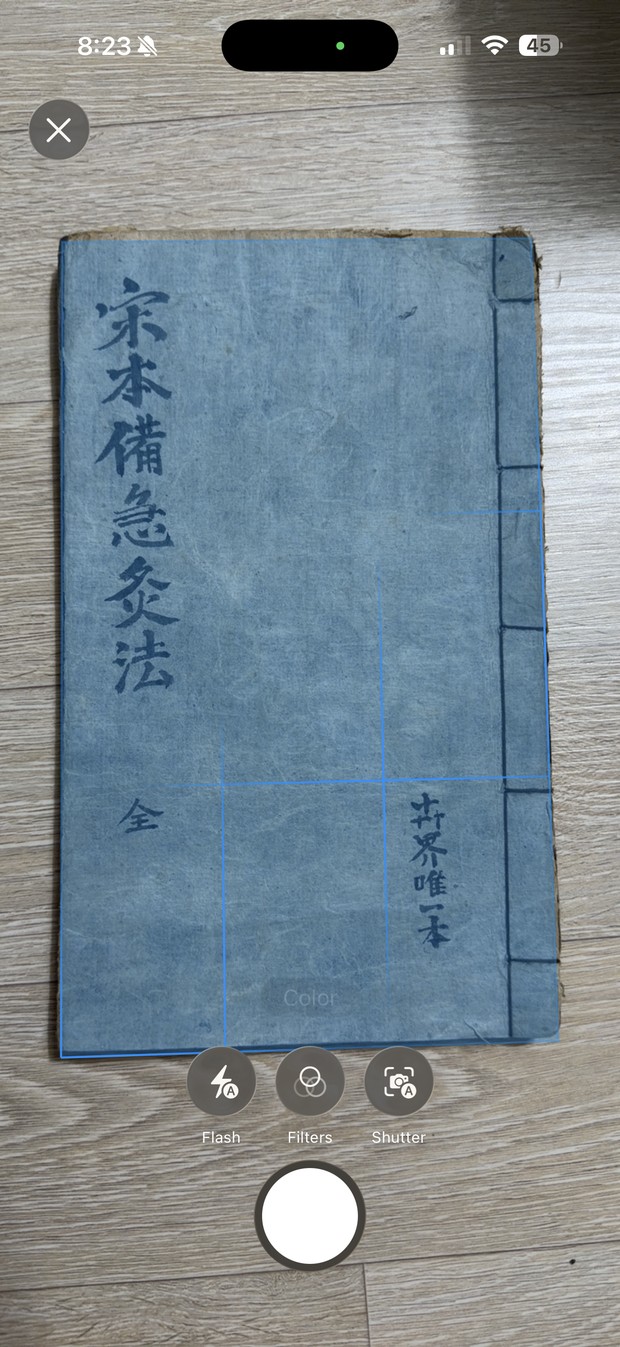
Point your camera at the book or document. You don't have to line up a shot. It snaps the photo on its own as soon as it sees one. One or two photos is plenty, in whatever light you've got.
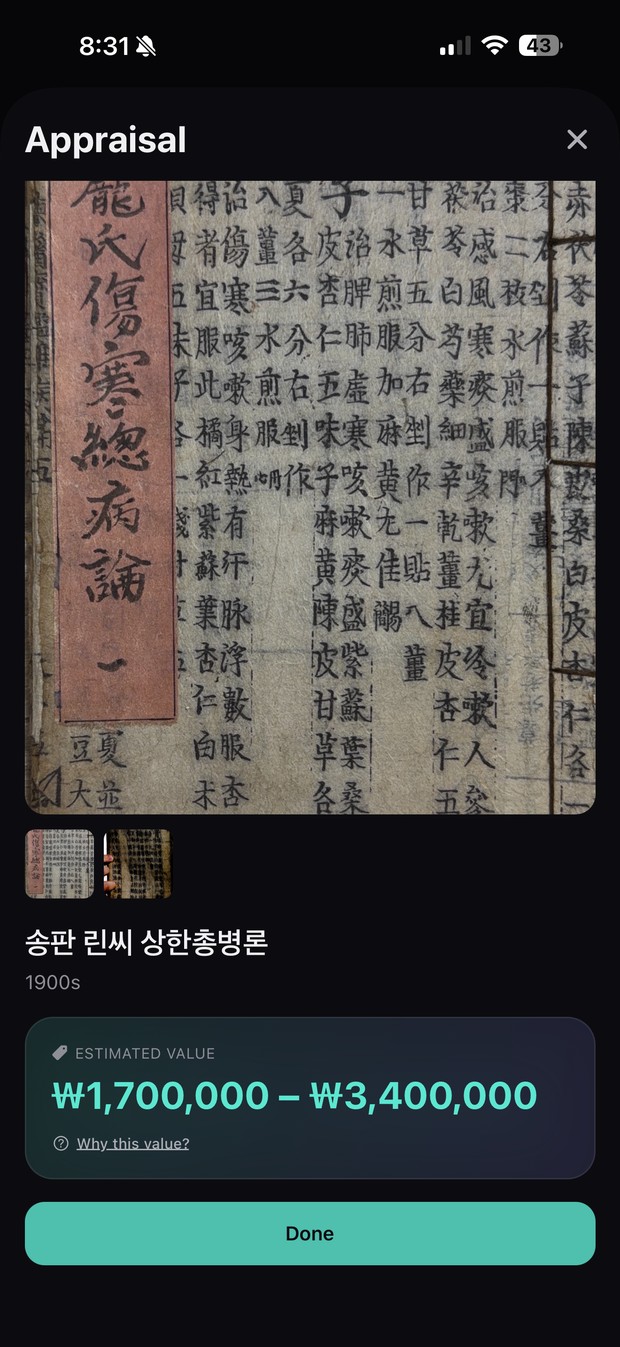
You'll get a title, roughly when it was made, its condition, and a price range based on what institutions have actually paid for similar pieces. It's always a range, never one exact number, and never a guess pretending to be a fact.

Frequently asked
You photograph a book or document, one or two photos is enough. We recommend the cover and the print page, since those carry the most identifying detail. It reads the cover and any visible printing, works out what it is and roughly when it was made, then hands you a price range to start from. That reading -- what it is, when it was made, what it is worth -- comes entirely from Ackee SLM, the small model we built ourselves.
Korean books, manuscripts, woodblock prints, and paper items like programmes and receipts. It's built for the kind of material found in museum and private collections, and it knows when something falls outside that rather than guessing. Paintings, comic books, and trading cards are coming next.
It gives you a range to work from, not a formal valuation. Four times out of five, the real value falls inside that range. Nine times out of ten, it's close enough to be useful even when it lands just outside. For insurance, sale, or donation, you'll still want a certified appraiser. Think of this as the step before that one.
It goes to our own servers, running Ackee SLM, the small model we built ourselves. Your photo is never sent to a third-party AI company. Alongside the appraisal we also show a short background note about that kind of item and period, and that text is generated by a third-party language model -- but it is only ever given the title and date our own model already read, never your photograph, and never the estimate. It has no part in what your item is valued at. We do keep the photos you take, and we use them to make Ackee SLM better over time. They're never sold, and they're never used for anything beyond improving the model.
A refusal is more useful than a made up number. An ordinary item comes back as "not a collectible" instead of a price. A photo it can't read comes back as a request for a better one.